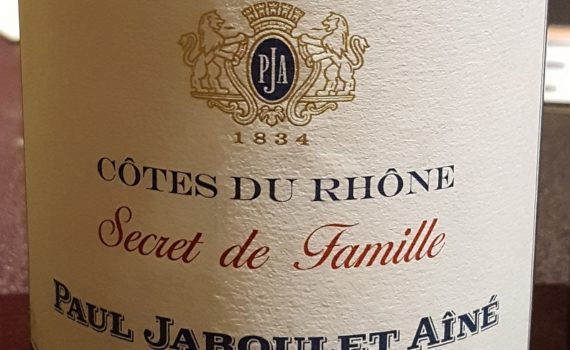
Just had this press release through giving details of the elevation of the red wines of Rasteau to full AOC level. Previously the mainly Grenache-based reds had to settle for being one of the named villages in the Côtes du Rhône Villages appellation. Top Rasteau producers include André Romero/Domaine la Soumade, Domaine Bressy-Messon, Domaine Gourt de Mautens and Domaine des Coteaux des Travers.
André Romero/Domaine la Soumade, Domaine Bressy-Messon, Domaine Gourt de Mautens and Domaine des Coteaux des Travers
Advertising maven John Hegarty – sorry – SIR John Hegarty needs no introduction for those in his field of influence. And the good news is that his field of influence is spreading ever wider- he’s due to do a presentation to the Institute of Masters of Wine about how wine should lose its mystery but retain its magic – and that’s what I’m aiming to do with my site. But Sir John – he’ll probably hate the monicker – also makes some rather nice wines at the southern French estate he bought in 2002. Unfortunately, one of his wines had me reaching for my guitar and wearing a Pocohontas wig…
Domaine de la Graveirette MusT 2007, Vin de Pays de la Principauté d’Orange, France (£9 Bowes Wine) Quite developed, almost port-like edges – is this suffering from oxidation? Some rustic, plummy tar edges, but lacks freshness – would make comments such as ‘Is this wine as you’d want it to be showing?’ at a tasting. ????
Hegarty Chamans Minervois les Chamans 2007, Languedoc, France (not in the UK at present) Showing the wild herby and crunchy/peppery violet edge of Carignan, concentrated but also perfumed, with vigorous blackcurrant & blackberry notes, touch of brett but in balance. B+
Hegarty Chamans Minervois Cuvée No.2 2008, Languedoc (£12.75 Adnams) Softer than the Chamans but more ethereal, with cooked strawberry and a plummy warmth tinged with rose petal and an earthy minerality, some liqueur flavour but no alcohol burn. S
Hegarty Chamans Minervois Cuvée No.1 2005, Languedoc (£15.50 Adnams) Has the classic Carignan footprint of spice, violet and peppery blackcurrant, tinged with the minerally note of the Minervois terroir, juicy & young, with a nice cooked wild strawberry edge, but lacks the tang and complexity No.2. S(-)
Hegarty Chamans Minervois Black Knight 2005, Languedoc, France (not in the UK at present) A more fleshy version of the above, with Grenache filling in the gaps missing in the previous wine. There’s the warm herbiness, notes of herby violet, orange peel, and plump plummy berry all with the firm, tannin, dry but promising structure and dusty/iron-rich terroir edges. Lovely wine. S+
More from the batches of wine that arrived from Morrisons & The Wine Society – this time it’s the reds (the whites are here).
The Society’s Claret NV (Sichel), Bordeaux, France (£5.95/£5.42 The Wine Society) Leafy, sappy, young and refreshing unoaked style, uncomplicated tender and fruity, does just what it should. B-
Sichel Lussac St Emilion 2007, Bordeaux, France (£11.99/£6 Morrisons) Reasonably fleshy but a touch over-extracted and with too much toasty oak for the level of fruit. OK at £6, not at £11.99. C+
The Society’s Rioja Crianza 2006 (Bodegas Palacio), Spain (£7.50 The Wine Society) Quite delicate young wine, with typical sappy strawberry flavours tinged with vanilla, but also more exotic hints of ginger and orange peel. B+
Lagunilla Rioja Reserva 2004 (aka M ‘The Best’ Rioja), Spain (£9.11/£6 Morrisons) A richer, fuller style, still with lots of red berry fruit, plus hints of chocolate and vanilla. Honest and welcoming but just a tad short. B+
The Society’s Côtes-du-Rhône NV (Ogier), France (£6.75 The Wine Society) Young, fresh, almost chillable style, with raspberry flavours and a touch of bubble gum (feels like a touch of carbonic maceration), a little gawky at the moment, but decent peppery finish. B-
Ramparts Côtes du Rhône Villages 2007, France (£9.99/£6 Morrisons) Sweeter and fleshier, with rounder plum and blackberry flavours, some chocolate edges (maybe from a touch of oak?) and a rich earthy finish. B(+)
Christophe Cordier Viré-Clessé Clos du Château 2008, Burgundy, France (£13.51 Domaine Direct) Very forward and ripe for young Burgundy, with richness of fruit and toasty oak to the fore. But there’s also acidity, along with citrus, pear and apple flavours, and the oak’s not OTT. Good intro to Burgundy. B+
Domaine Cordier Pouilly-Fuissé Cuvée Première 2007, Burgundy France (£17.83 Domaine Direct) Less ‘in yer face’ but also more restrained and relaxed than the Viré-Clessé, toasty oak making its presence felt, but in harmony with the rhubarb, ripe lemon and pear flavours and a cashew-like nuttiness. Classy and promising. S
Château Redortier Côtes du Rhône ‘Côté Dentelles’ 2008, Rhône, France (~£9 Smart Wines) Refreshing peppery/stalky notes – you could almost chill this in summer – backed up by lovely rounded plump damson, blackcurrant and blackberry fruit surrounding, earthy iron-edged finish with a touch of herbs. S-
Château Redortier Gigondas 2006, Rhône, France (~£15 Smart Wines) Riper and fleshier than the Côtes du Rhône, but never descends into overripe bimbo-dom. There’s a grilled meat type character, along with more of the iron edge, and there’s wonderful tangy black fruit in abundance. Very tasty, very moreish. S(+)
A couple of years ago, I was asked by someone to do a list of some of the more unusual aspects of Rhône Valley wines – here’s what I came up with…
Hermitagé
Wine from the hill of Hermitage was routinely shipped across France in the 18th and 19th century to beef up the wines of Bordeaux. And not just basic claret. Several classed growth châteaux felt no shame in declaring on the labels that their wine had been Hermitagé. With the phylloxera epidemic of the late 19th century, supplies of Hermitage dried up and the practice waned. However, in the last decade, it has resurfaced, and at some of France’s best-known estates. In 2004, the renowned Margaux producer Château Palmer blended around 15% Hermitage with one of its cuvées to produce a four-barrel experimental batch called Historical 19th Century Wine L2004. A year later, another famous Bordeaux name, Michel Rolland, joined forces with Michel Chapoutier to produce M² (m carré) – the name M&M had already been taken… Rolland contributed a batch of Merlot from Château Le Bon Pasteur in Pomerol, while Chapoutier chipped in with some Syrah from the L’Ermite vineyard. Don’t go looking for it in Threshers however. The wine was auctioned, with the proceeds going to M. Chapoutier Vins et Santé, a charity for children with leukaemia.
Coteaux de Seyssuel
In 1995, three northern Rhône growers, Yves Cuilleron, Pierre Gaillard and François Villard joined forces to form Les Vins de Vienne. They’ve since been joined Pierre Jean Villa and together run one of the Rhône’s most enterprising négociant businesses. However, they also have their own vineyards on the steep hills of the commune of Seyssuel, north of the town of Vienne, and the narrowest part of the northern Rhône valley. It’s a place documented as being an excellent source of wine as far back as Roman times, but the vineyards were wiped out by phylloxera in the late 1800s and never replanted. Then in 1996, the talented trio picked out a plot of land on which to plant Syrah and Viognier where the soils and aspect were almost identical to those of Côte Rôtie. They now make four Seyssuel wines. Sotanum and Tabernum are both 100% Syrah, while Heluicum is all Viognier – these names come from Pliny the Elder, who wrote that ‘a plant with black grapes, known as Vitis allobrogica, grown in the area of Vienne, produces 3 crus: Sotanum, Taburnum and Heluicum, according to the terroir.’ There’s no AOC for Seyssuel, so they are labelled Vin de Pays des Coteaux Rhodaniennes. The fourth wine is Cépées Caties – ‘withered berries’ – made from late harvested Viognier, which doesn’t fit into an appellation pigeonhole and has to settle for vin de table status. All deserve serious attention.
(Stockists include Berry Bros & Rudd, Clarion Wines and Armit)
Vin de Paille
No, not Frank Lampard’s favourite tipple, this is the Rhône take on the passito wines of northern Italy, in which grapes are allowed to dry on straw (paille) mats before the winemaking process begins. The Rhône version is made from Marsanne from Hermitage, and is as sumptuous as it is rare and expensive, but the honeyed, creamy, marmaladey wine is something every serious wine lover should try at least once. Chave and Chapoutier are the masters, although the Cave de Tain also does an excellent version.
Brézème
Brézème – or Côtes du Rhône Brézème, to give it its full name – is a tiny appellation with a bit of an identity crisis. It lies south of Valence in what is technically the southern Rhône, but the main grapes are those of the north, namely Syrah for rare reds and Marsanne, Roussanne and Viognier for the even rarer whites. In the mid-1800s, the wines rivalled those of Hermitage in both quality and price, but by the early 1960s, less than one hectare of vines remained, with François Pouchoulin being the main grower. Then in the 1970s, Jean-Marie Lombard took over his father’s farm and breathed new life into the appellation. For several years he was the only producer of any note in the region, but he now has competition from a handful of other producers, most notably Eric Texier, who has access to Pouchoulin’s ancient vines and is putting them to impressive use.
(Stockist: Yapp for Jean-Marie Lombard, HG Wines for Eric Texier)
Die
Pronounced like the Welsh river rather than Welsh forename, Die is a town on the eastern edge of the Rhône valley. A confusing town, when it comes to wine. There is still wine called Châtillon-en-Diois, for which the permitted grapes are Gamay, Pinot Noir, Syrah, Aligoté and Chardonnay, and another called Coteaux de Die, made from the rather basic Clairette grape. There is Crémant de Die, a traditional method fizz made from Clairette and formerly known as Clairette de Die Brut. Then there is Clairette de Die Tradition, a sweet wine made mostly from Muscat (Clairette must be less than 30% of the blend) in the méthode dioise. This involves partially fermenting the wine, chilling it, bottling it, letting it warm up for fermentation to restart, then decanting it off, filtering it and bottling it with an alcohol level of 7-8% and some residual sugar. Got all that? If you haven’t, don’t sweat – finding any of these quite different styles of wine outside the region is something of a challenge.
Rasteau
As well as being one of the ‘named’ places that is entitled to append it name to the in the Côtes du Rhône-Villages appellation, the commune of Rasteau also produces vin doux naturel, made predominantly from Grenache – Noir for the red, Gris and Blanc for the less common white. As with many VDNs, methods of ageing differ from cellar to cellar, with some bottling the wines young and fresh, others giving them cask ageing, while still others pursue the rancio style. The wines from André Romero’s Domaine la Soumade are probably the finest examples. Two other Vaucluse communes, Cairanne and Sablet, can also sell their VDNs as Rasteau.
Domaine Viret Never mind organic farming, on their estate in the commune of Saint Maurice sur Eygues in the southern Rhône, father and son Alain and Philippe Viret practice Cosmoculture. According to the Virets, it’s based ‘…on exchanges between cosmic and telluric [terrestrial] energies.’ Cosmoculture makes conventional biodynamic practices look positively mainstream. So for example you’ll find menhirs (the things that Obelix delivers, for Asterix fans) in the vineyards, placed so as to direct those telluric energy fields. The winery, sorry, ‘cathedral of wine’ is inspired by ancient Inca and Mayan cultures and aligned according to the position of the sun on Philippe’s birthday in 1973. The massive granite blocks used for construction are sized according to the Royal Cubit (~524 mm) and the shape of the cathedral conforms to the Golden Section. Add in mystic fountains, crystals, amphorae and more and you have one of the world’s weirdest wineries. But the wines are excellent, brimming with life and personality, and deserve serious attention. If you want to find out more about aspects of Cosmoculture such as Radionic Culture, Geobiology, Planetary Beacons and Water Memory, check out the Viret web site at www.domaine-viret.com. And if you want to try the wines, they’re imported by Artisan Wines.
St Péray
The forgotten appellation of the northern Rhône, St Péray seems like something of an anomaly in a red wine-dominated region. Yes, there are a couple of other white wine-only AOCs in the form of Condrieu and Château Grillet, but they aspire to – and often achieve – greatness. But historically, the Marsanne and Roussanne-based sparkling and still wines of St Péray haven’t shone. However, there are signs that this could be changing. This is one part of the northern Rhône where vineyards are still available at relatively affordable prices. There’s no reason why vineyards with the best terroir – south-facing sites with granite soils similar to those of neighbouring Cornas – shouldn’t yield some excellent, ageworthy wines. While sparkling wines have dominated production in the past, don’t be surprised to see more good still whites appearing in the future to compete with those from Bernard Gripa and Alain Voge.
Not just Côte Rôtie
The rise in popularity of Syrah-Viognier blends can be traced back to Côte Rôtie, where the appellation permits the addition of up to 20% Viognier to soften and add fragrance to the sterner Syrah. But it isn’t the only Rhône red that can contain white grapes. Châteauneuf du Pape famously contains 13 different grape varieties, of which six – Picardan, Clairette, Roussanne and Bourboulenc, plus the light-skinned variants of Grenache and Picpoul – are white. And in the northern Rhône, Cornas is the only red wine appellation that doesn’t allow white grapes in the blend. Marsanne and Roussanne can make up 15% of the blend in Hermitage and Crozes Hermitage, and 10% in St Joseph. That few growers actually use any white grapes is another matter entirely.
No saucers, no cigars On October 28 1954, the Mayor of Châteauneuf-du-Pape issued the following decree:-
Article 1. The taking-off, landing and flying overhead of the aircraft known as flying saucers or flying cigars, of whatever nationality, are prohibited in the territory of the commune of Châteauneuf-du-Pape.
Article 2. Any such flying saucer or flying cigar landing on the territory of the commune will immediately be taken to the pound.
Article 3. The village police officer and urban police officer, in their respective jurisdictions, are responsible for enforcing this decree.
The law, still to be repealed, was the inspiration for the Bonny Doon’s Châteauneuf-esque blend Le Cigare Volant.
Andy Kerr has a full-time job in Chester but moonlights as on-line wine merchant Artisan Wines (www.artisanwines.co.uk). And while his range isn’t the largest in the UK, it’s one of the more intriguiing, focussing as it does on (currently) exclusively French wines, with a distinct organic and biodynamic slant. Some of the wines in the selection will divide opinion – the Savennières from Nicolas Joly for example. Others will raise eyebrows – if you though biodynamics was bonkers, then the cosmoculture of Domaine Viret qualifies as totally deranged**. Overall, it’s an inspiring selection that deserves a much wider audience. Here are some notes on some wines I tried from the range in April (all are biodynamic bar the Marionnet):-
Domaine de l’Ecu Muscadet Cuvée Classique 2007 (£7)
Clean, nutty, very waxy bruised apple style, nutty, almost flor-like note, rich and beautifully balanced with bite and finesse.
Domaine Philippe Gilbert Menetou Salon Blanc 2007 (£9.75)
Looking good for 2007, with crisp, tangy citrus and grass flavours, hints of herbs and a quite fleshy, almost honeyed finish – good honest Sauvignon.
Domaine de la Coulée de Serrant Les Vieux Clos Savennières 2006 (£16)
The entry-level wine from Nicolas Joly’s Domaine de la Coulée de Serrant is alarmingly concentrated, but has a pronounced savoury, cidery style that takes some coming to terms with. Some will love it, others (me included) will say it’s oxidised – are you tasting terroir or winemaking style? (Joly says his wines need time once opened to show at their best – I gave it 48 hours, and it remained in a similarly awkward state)
Domaine des Roches Neuves Saumur-Champigny 2007 (£9.75)
Joyful, fresh, sappy Cabernet Franc at its best, balanced and earthy with the classic raspberry and blackcurrant leaf edge, classic chillable summer red
Henry Marionnet Les Cépages Oubliées Gamay de Bouze 2006 (£9.50)
From a red-fleshed mutation of regular Gamay, this is like a rustic southern Burgundy, with spicy, smoky cherry and raspberry flesh, and rich, hearty finish
Montirius Gigondas Terres des Aînes 2005 (£13.50)
Bold and fleshy, with bumptious plum, herb and berry character and an earthy minerality comeing through strongly. Would be very good but for the level of brettanomyces, which takes the edge off the freshness of the fruit, and adds a barnyard-y character – which some will love.
—————————
** On the subject of Domaine Viret, here’s a little something I wrote a while ago for Wine & Spirit International magazine (which merged with Harpers earlier this year)…
Never mind organic farming, on their estate in the commune of Saint Maurice sur Eygues in the southern Rhône, father and son Alain and Philippe Viret practice Cosmoculture. According to the Virets, it’s based ‘…on exchanges between cosmic and telluric [terrestrial] energies.’ Cosmoculture makes conventional biodynamic practices look positively mainstream. So for example you’ll find menhirs (the things that Obelix delivers, for Asterix fans) in the vineyards, placed so as to direct those telluric energy fields. The winery, sorry, ‘cathedral of wine’ is inspired by ancient Inca and Mayan cultures and aligned according to the position of the sun on Philippe’s birthday in 1973. The massive granite blocks used for construction are sized according to the Royal Cubit (~524 mm) and the shape of the cathedral conforms to the Golden Section. Add in mystic fountains, crystals, amphorae and more and you have one of the world’s weirdest wineries. But the wines are excellent, brimming with life and personality, and deserve serious attention. If you want to find out more about aspects of Cosmoculture such as Radionic Culture, Geobiology, Planetary Beacons and Water Memory, check out the Viret web site at www.domaine-viret.com. And if you want to try the wines, they’re imported by Artisan Wines (www.artisanwines.co.uk)
“The Rhône Valley’s vineyards welcome you with open tendrils”
At least that’s what it says on this page from the not especially useful Inter-Rhône web site. For me open tendrils smacks too much of the Triffid. No matter. I’m married to a lovely laydee who is a big Grenache fan, so I popped the cork earlier this evening on a bottle from the southern Rhône that I thought she’d enjoy. She did, but only briefly, before heading out for a farewell shindig for one of the stalwarts of DUEYP (prizes to the first correct translation). Which leaves me and Al the Pal (soon to be 8, and currently torn between James Bond & Star Wars) at home. He prefers Vimto to wine, so I’m currently in sole charge of the Domaine du Joncier Lirac 2006 (£8.54 Waitrose, although they don’t look to have much left from the web site).
Not exactly waiting for Jill to hurry back, since this is rather decent kit. Remember jammy dodger biscuits? I think they still make them, certainly there’s a hint of that cooked strawberry decadence here. But there’s also some meaty, spicy fruit, and a more profund earthy, almost metallic core of dense potential. I only have the one bottle – if I’d had 2, I’d have been stashing the other one away for at least a couple of years. Not bargain basement, but still a bargain.
Don’t know why, but on one of the chilliest weekends in recent years, we’ve by-passed red wines and been sipping and supping white wines, all from southern France. It’s a vast and varied region, and as with the reds, trying to pigeon-hole them under one banner is somewhat difficult. But the best do have something in common. I’m not talking here about the many varietal Chardonnays and Sauvignons – they’re perfectly adequate Ronseal wines, (they do what they say on the labels) but they seldom set the pulse racing. No, the real excitement is in those rather wacky grapes such as Marsanne, Roussanne, Rolle (aka Vermentino), Bourboulenc and Grenache Blanc. These grapes aren’t out-and-out fruity and in-yer-face, but planted in the right place, but the right grower, they make wines that intrigue rather than assault, and can compete on complexity terms with some of France’s finest whites. And where once they wobbled and keeled over with a couple of years of vintage, today they’re happy to spend a number of years in bottle.
Friday saw us on 2005 Château Gravade Minervois, Languedoc (£7.95 Vintage Roots)
It’s a blend of Roussanne and Grenache Blanc, pepped up with 10% Muscat à Petits Grains, and then partially oak-aged. The result is a wine that manages to be rich, yet remain fresh and sappy, with the citrus flavours boosted by notes of vanilla, herbs and honey overtones. Good by itself, but also a decent cheeseboard white.
Saturday saw us climb to the 2006 Domaine d’Aupilhac Coteaux du Languedoc Montpeyroux Blanc Les Cocalières (£17.35 Berry Bros & Rudd)
Sylvain Fadat has been at the forefront of the Languedoc red revolution for several years, but he’s no slouch on the white front either. Les Cocalières is equal shares of Marsanne, Rolle, Roussanne and Grenache Blanc, fermented and aged in old barrels of varying sizes. It’s still a pup, but its already awash with character – white pepper, honey, quince, dried apricots and more, with freshness and minerality coming through on the finish. Good now, better in a couple of years – move quickly if you’d like to try it as supplies are limited.
If Les Cocalières was the wine for tomorrow, then the 2005 Domaine des Anges Côtes du Ventoux l’Archange (£9.95 The Big Red Wine Company) was absolutely perfect for today.
Château de Beaucastel’s fabulous Châteauneuf du Pape Vieilles Vignes is the benchmark for oak-aged Roussanne, but here’s an excellent alternative for a fraction of the price, rich in smoky pearskin and peach flavours, with oatmeal and honey on the finish, and some of that classic spent-match character (is it minerality, is it barrel related?) that you find in top white Burgundies. Three great wines, one great weekend.